
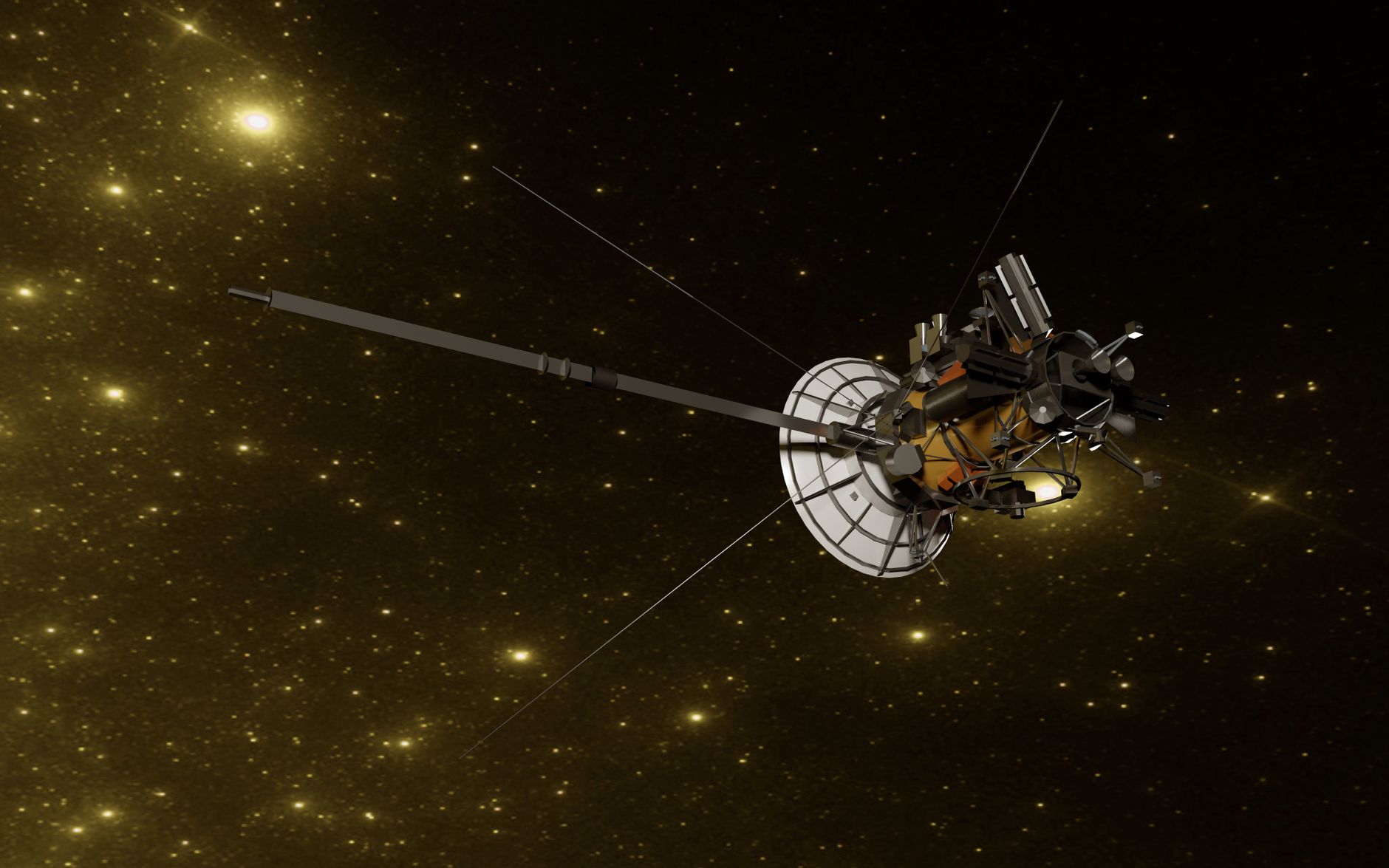
The Voyager 1 mission has achieved a remarkable light-day milestone, showcasing NASA’s enduring legacy in space exploration. This achievement highlights the ongoing journey of humanity’s quest to understand the cosmos.
Overview of the Voyager 1 mission
The Voyager 1 mission, launched by NASA in 1977, has been a remarkable journey through our solar system and beyond. As the first spacecraft to travel into interstellar space, Voyager 1 has provided invaluable data about the outer planets and the heliosphere. Its primary mission was to study Jupiter and Saturn, but it has far exceeded expectations, continuing to send back information for over four decades.
Recently, the mission reached a significant milestone, traveling more than 14 billion miles from Earth, making it the most distant human-made object in space. This achievement showcases the durability and ingenuity of the technology used in the Voyager program.
As Voyager 1 ventures further into the cosmos, it continues to offer insights into the nature of space, including:
- The characteristics of cosmic rays
- The interaction between solar wind and interstellar medium
- New findings about distant celestial bodies
Significance of the light-day milestone
The recent achievement of the light-day milestone by the Voyager 1 mission marks a significant moment in space exploration history. This milestone demonstrates the probe’s extraordinary journey through interstellar space, providing invaluable data about the outer solar system and beyond.
According to Linda Spilker, a key scientist on the Voyager 1 mission, this achievement highlights the enduring legacy of the spacecraft. The mission has surpassed expectations, continuing to send back information more than 45 years after its launch.
The significance of this milestone can be summarized in several key points:
- Distance Traveled: Voyager 1 has traveled over 14 billion miles from Earth.
- Scientific Contributions: The mission has provided insights into cosmic rays and magnetic fields.
- Long-lasting Impact: Voyager 1 continues to inspire future generations of scientists and explorers.
This remarkable journey underscores human ingenuity and the spirit of exploration.
Linda Spilker’s insights on the mission
Linda Spilker, a key scientist involved in the Voyager 1 mission, shared significant insights regarding the recent light-day milestone achieved by the spacecraft. She emphasized the importance of this achievement in understanding the boundaries of our solar system and the broader universe.
“Reaching the light-day milestone is not just a number; it represents decades of exploration and discovery,” Spilker stated. She elaborated on how the Voyager 1 mission has provided invaluable data about the heliosphere and interstellar space.
As the spacecraft travels further from Earth, Spilker noted the ongoing contributions to our knowledge of cosmic phenomena. She highlighted the mission’s role in inspiring future generations of scientists and explorers.
According to Spilker, the Voyager 1 mission continues to push the limits of human understanding, showcasing the remarkable capabilities of technology and the spirit of exploration.
Challenges faced during the Voyager 1 journey
The Voyager 1 mission has faced numerous challenges throughout its journey, pushing the boundaries of technology and human ingenuity. As it ventured into the unknown, several obstacles arose, highlighting the complexity of interstellar exploration.
- Distance Communication: Maintaining communication over vast distances has been a significant hurdle. Signals take over 22.5 hours to reach Earth, creating a delay in data transmission.
- Power Limitations: Voyager 1 relies on radioactive isotopes for power, which diminish over time, raising concerns about the longevity of its instruments.
- Cosmic Radiation: The spacecraft encounters high levels of cosmic radiation, which poses risks to its electronic systems and instruments.
- Navigation Challenges: Accurately navigating through the unpredictable environment of space requires sophisticated technology and constant adjustments.
Despite these challenges, the Voyager 1 mission continues to provide invaluable insights into our solar system and beyond.
Future of the Voyager 1 mission
The future of the Voyager 1 mission remains a subject of great interest and speculation among scientists and space enthusiasts alike. As the spacecraft continues its journey through interstellar space, its primary objective is to gather data about the heliosphere and the surrounding environment.
Though communication with Voyager 1 becomes increasingly challenging due to its vast distance, NASA engineers are committed to maintaining contact as long as possible. Current projections suggest that the spacecraft could remain operational until around 2025, depending on its power supply and the functionality of its instruments.
Future explorations may focus on:
- Collecting data on cosmic rays
- Studying the interstellar medium
- Providing insights into the outer boundaries of our solar system
Ultimately, the Voyager 1 mission will continue to inspire future generations of explorers as it pushes the boundaries of human knowledge.
Technological advancements from Voyager 1
The Voyager 1 mission has been a cornerstone of technological advancements in space exploration. Since its launch in 1977, it has not only provided invaluable data about our solar system but has also led to significant innovations in spacecraft technology.
Some key advancements include:
- Enhanced Communication Systems: Voyager 1’s communication systems enable long-distance data transmission, which has been crucial for maintaining contact over vast distances.
- Robust Power Sources: The mission utilizes radioisotope thermoelectric generators, ensuring a steady power supply for scientific instruments even after decades of travel.
- Improved Imaging Technology: The cameras and sensors aboard Voyager 1 have set new standards for imaging distant celestial bodies, allowing for unprecedented views of planets and their moons.
These technological advancements continue to influence modern spacecraft design and inspire future missions, solidifying the Voyager 1 mission’s legacy in the annals of space exploration.
Impact on space exploration
The Voyager 1 mission has profoundly influenced our understanding of the cosmos and paved the way for future explorations. By successfully traversing the outer planets and beyond, it has provided invaluable data that continues to inform scientific research and public interest in space.
The mission’s achievements have inspired a new generation of scientists and engineers to push the boundaries of space exploration. This legacy is evident in various projects aimed at exploring distant worlds and understanding our solar system’s dynamics.
Furthermore, the Voyager 1 mission has highlighted the importance of long-term missions. Its ability to send back data from interstellar space demonstrates the potential for human ingenuity to overcome immense challenges. As we look to the future, the lessons learned from Voyager 1 will undoubtedly shape the next steps in our quest to explore the universe.
- Inspiration for new missions
- Long-term scientific impact
- Pioneering deep space exploration
Public interest in Voyager 1’s discoveries
The Voyager 1 mission has captivated the public’s imagination since its launch, leading to a widespread interest in its groundbreaking discoveries. As the spacecraft continues to travel through interstellar space, many people are eager to learn more about its findings and the knowledge it has provided about our solar system and beyond.
Notable events, such as the recent achievement of the light-day milestone, have further ignited curiosity among space enthusiasts and the general public alike. Educational programs and social media campaigns have played a significant role in sharing the mission’s progress and discoveries with a broader audience.
Furthermore, the engaging discussions surrounding Voyager 1’s scientific contributions have inspired new generations to pursue careers in science, technology, engineering, and mathematics (STEM). As Voyager 1 continues its journey, it remains a symbol of human exploration and ingenuity, highlighting our quest for knowledge about the universe.
Photo by Paul Seling on Pexels
References
Sky & Telescope · Voyager 1 Mission profile
Related reading
Anurag University Rocket Launch: Proven Success at IN-SPACe · AI Audiobook Recommendations: Best Smart Features Unveiled · Starship Catch Success: A Proven Milestone for Space Travel