
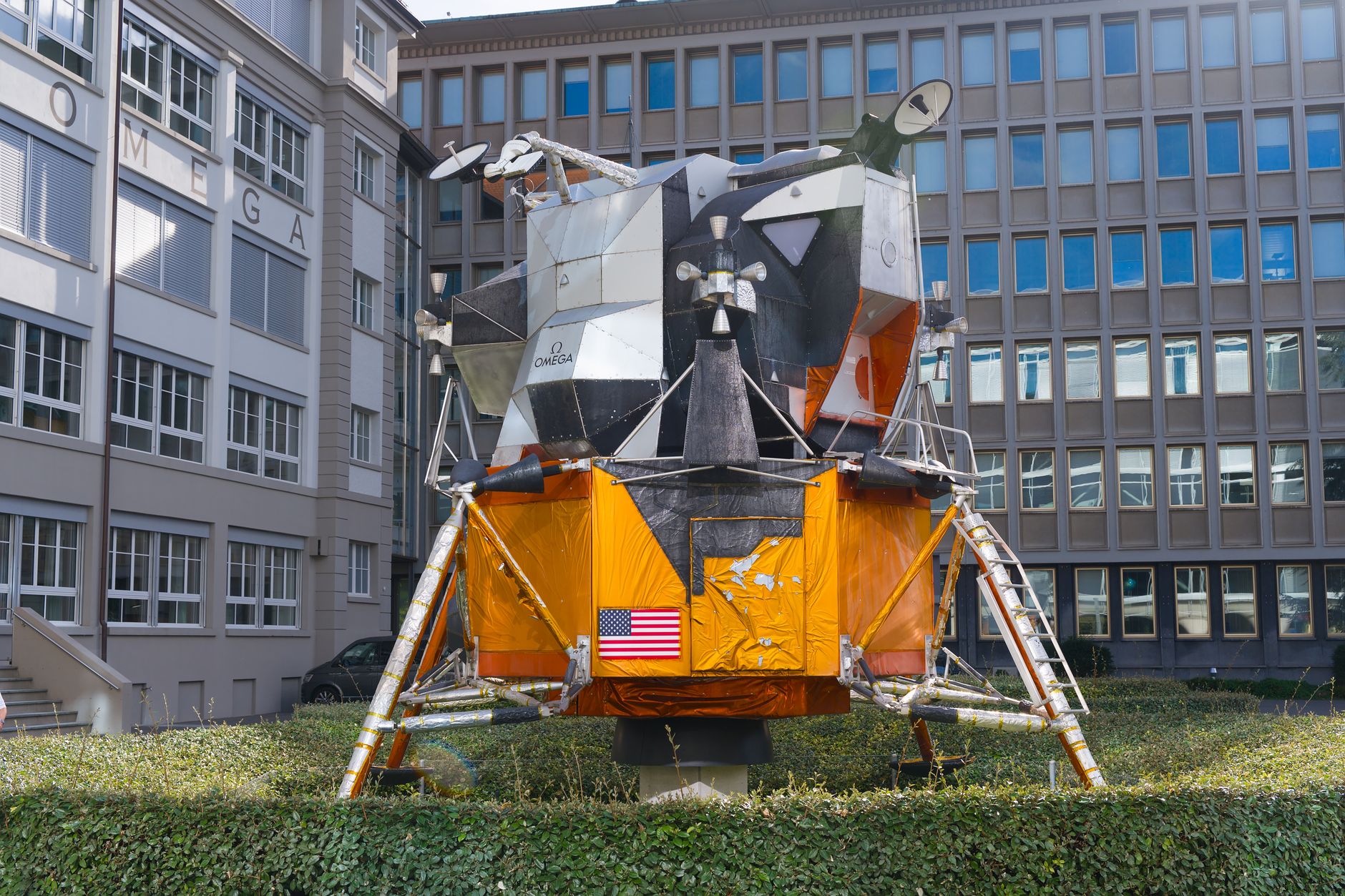
ESA Argonaut lunar lander has achieved a significant milestone with its engine test, marking a pivotal moment in lunar exploration efforts.
Overview of ESA Argonaut lunar lander
The ESA Argonaut lunar lander is making significant strides in its development, with recent engine tests marking a crucial milestone. This innovative spacecraft is designed to support a variety of scientific missions on the lunar surface, aiming to enhance our understanding of the Moon’s composition and geological history.
The main objectives of the ESA Argonaut lunar lander include:
- Scientific Exploration: The lander will carry advanced instruments to conduct experiments and gather data about the Moon’s environment.
- Resource Utilization: It aims to explore the potential for utilizing local resources, which is vital for future lunar missions.
- Technology Demonstration: The Argonaut will test new technologies that could be used in subsequent missions to the Moon and beyond.
Developed in collaboration with industry partners, the Argonaut lunar lander is equipped with a propulsion system that has recently undergone rigorous testing by Nammo UK. The successful engine test demonstrates the reliability and performance of the lander’s propulsion technology. This achievement not only moves the project closer to its launch date but also underscores the growing capabilities of European space endeavors.
As the ESA Argonaut lunar lander continues to progress, it represents a significant step forward in lunar exploration, paving the way for future missions aimed at deepening our understanding of the Moon.
Importance of engine tests in space missions
Engine tests play a crucial role in the success of space missions, particularly for complex projects like the ESA Argonaut lunar lander. These tests are essential for validating the performance and reliability of propulsion systems that will ultimately carry payloads to the Moon and beyond.
During the development phase, engineers conduct a series of rigorous assessments to ensure that the engines can withstand the harsh conditions of space travel. The importance of these tests is underscored by the fact that even minor failures can lead to mission complications or catastrophic outcomes.
Each engine test simulates the conditions of launch and landing, providing valuable data on fuel efficiency, thrust capabilities, and overall system integrity. By collecting and analyzing this data, engineers can make necessary adjustments to improve performance and ensure the engine operates as intended during actual missions.
Moreover, successful engine tests not only demonstrate the technological advancements behind the ESA Argonaut lunar lander but also boost confidence among stakeholders and potential partners. With every milestone achieved, the mission moves closer to its goal of exploring lunar terrain, paving the way for future exploration endeavors.
In summary, engine tests are vital for safeguarding the success of space missions, making them a cornerstone of the development process for innovative spacecraft like the ESA Argonaut lunar lander.
Nammo UK’s role in the project
Nammo UK has played a crucial role in the development of the ESA Argonaut lunar lander, contributing significantly to the engine test milestone that was recently achieved. As a prominent aerospace propulsion company, Nammo UK specializes in advanced propulsion systems, making them an invaluable partner in this ambitious space endeavor.
Their expertise has been instrumental in the design and testing of the propulsion system for the Argonaut lunar lander, which is set to play a vital role in future lunar exploration missions. The successful engine tests not only demonstrate the technical capabilities of Nammo’s systems but also underline the collaborative efforts between various organizations within the European Space Agency’s framework.
Key aspects of Nammo UK’s contributions include:
- Innovative Propulsion Solutions: Nammo has developed state-of-the-art propulsion technology tailored specifically for lunar applications.
- Rigorous Testing Protocols: The company implemented stringent testing procedures to ensure the reliability and performance of the engine systems.
- Collaboration with ESA: Nammo UK worked closely with ESA engineers to align their technical specifications with mission requirements.
The successful completion of the engine tests marks a significant step towards the operational readiness of the ESA Argonaut lunar lander, paving the way for future exploration initiatives aimed at expanding our understanding of the Moon.
Future plans for the Argonaut lander
The future plans for the ESA Argonaut lunar lander are ambitious and aim to expand humanity’s presence on the Moon. Following the successful engine test milestone announced by Nammo UK, the project is now transitioning to the next phases of development. Key milestones include further testing of the lander’s systems and the integration of advanced technologies that will enable it to perform complex lunar missions.
One of the primary goals is to prepare the Argonaut lander for its eventual deployment on the lunar surface. This involves a series of rigorous tests to ensure its reliability and functionality. The team is focused on optimizing the lander’s propulsion system, which is critical for controlled landings and takeoffs. Additionally, the Argonaut will be equipped with scientific instruments designed to gather valuable data about the Moon’s composition and environment.
In collaboration with international partners, the ESA plans to utilize the Argonaut for various missions, including potential collaborations with lunar exploration initiatives. The lander’s capabilities may support future manned missions to the Moon, contributing to a sustainable lunar presence. With each step forward, the ESA Argonaut lunar lander is paving the way for new discoveries and advancements in space exploration.
Challenges faced during testing
During the testing phase of the ESA Argonaut lunar lander, engineers encountered several significant challenges that tested their ingenuity and resilience. One of the primary issues was ensuring the reliability of the propulsion system under extreme conditions. The engine needed to perform consistently in the harsh environment of space, where temperature fluctuations and vacuum conditions could impact its functionality.
Another challenge was the integration of various subsystems within the lander. The Argonaut’s design required seamless coordination between the navigation, communication, and propulsion systems. Any miscommunication could have led to catastrophic failures during the landing phase, making rigorous testing essential.
Moreover, the team had to navigate the complexities of regulatory compliance and safety standards. Each test had to adhere to strict guidelines to ensure that the Argonaut lunar lander would operate safely during its mission. This involved extensive documentation and review processes, which added time to the project timeline.
Lastly, the testing environment itself posed challenges. Simulating lunar conditions on Earth is no simple task. Engineers had to develop advanced testing facilities that could mimic the moon’s surface and gravitational effects, which required significant investment and innovation.
Despite these hurdles, the successful completion of the engine test milestone is a testament to the hard work and dedication of the team behind the ESA Argonaut lunar lander.
Impact on lunar exploration
The successful engine test milestone achieved by the ESA Argonaut lunar lander marks a significant development in lunar exploration. This advancement not only demonstrates the reliability of the lander’s propulsion system but also enhances the overall confidence in future lunar missions. With the Argonaut lander poised to facilitate crucial scientific investigations on the Moon, its successful tests signal a new era for European space exploration.
As space agencies around the world turn their attention back to the Moon, the Argonaut lunar lander is positioned to play a pivotal role. The lander’s capabilities are expected to support a variety of missions, including the deployment of scientific instruments and the establishment of sustainable lunar habitats. The progress made in engine testing reaffirms the commitment of the European Space Agency (ESA) to push the boundaries of our understanding of lunar geology and potential resources.
Additionally, the outcome of these tests could set a benchmark for future lunar landers, influencing designs and technologies used by other space agencies. The ESA Argonaut lunar lander exemplifies how international collaboration and cutting-edge engineering can pave the way for groundbreaking discoveries on the Moon. As preparations continue, the implications of this engine test milestone extend beyond mere technical achievements, inspiring a new generation of explorers and scientists.
Expert opinions on the milestone
Experts in the field of aerospace engineering have expressed enthusiasm regarding the recent engine test milestone achieved by the ESA Argonaut lunar lander. Dr. Emma Lindgren, a propulsion specialist at the European Space Agency, stated, “This successful test is a critical step not only for the Argonaut mission but also for advancing our understanding of lunar exploration technologies.”
Similarly, Dr. David Orton, an analyst at the International Space Research Institute, emphasized the broader implications of the achievement. “The ESA Argonaut lunar lander represents a shift in how we approach lunar missions. The engine’s reliability is paramount for ensuring that future landers can operate efficiently on the Moon’s surface.”
Industry insiders also weighed in on the significance of this milestone. “The rigorous testing protocols put in place by Nammo UK have set a new standard for engine development in space exploration,” remarked Sarah Thompson, a propulsion engineer. “It’s essential for building confidence in the technology that will be used in upcoming missions.”
As experts continue to analyze the results from the tests, the consensus is clear: the ESA Argonaut lunar lander is poised to make a significant impact on future lunar exploration efforts. “This is just the beginning,” Dr. Lindgren concluded, highlighting the potential for further advancements in space technology.
Photo by Jean-Paul Wettstein on Pexels